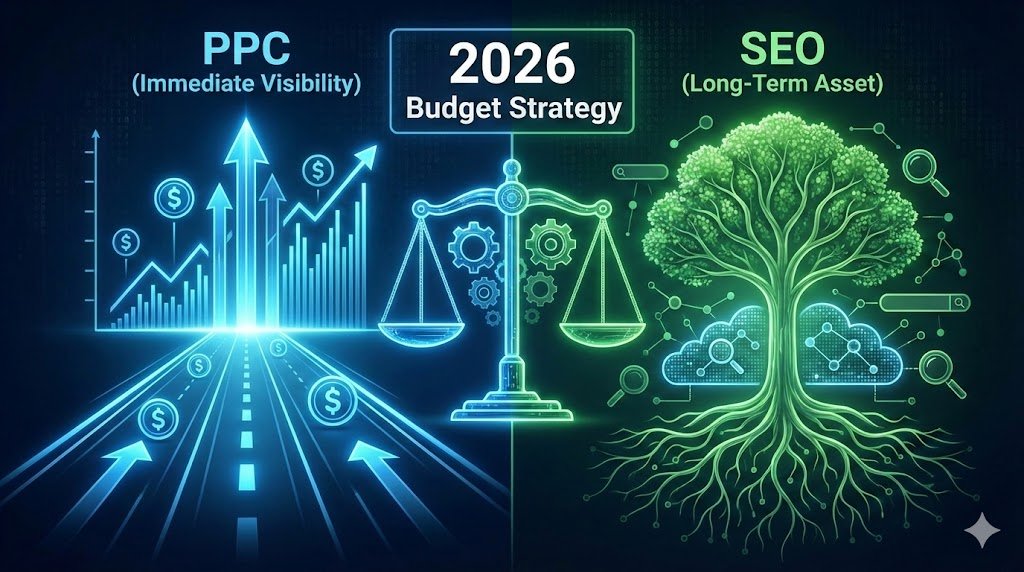
Below, we break down the recommended allocations and strategic considerations to maximize your ROI.
1. Suggested Budget Allocations by Growth Stage
There is no magic ratio that fits everyone. Recommended starting points vary significantly based on where your company stands in its lifecycle. It is crucial to align your spend with your growth strategy:
- New Businesses / Early Growth (70% PPC / 30% SEO): Prioritizes immediate traffic and lead generation while foundational SEO begins building authority. At this stage, visibility is purchased while organic assets are being built.
- Mid-Growth / Expanding Brands (50% PPC / 50% SEO): A balanced approach to maintain instant visibility while scaling cost-effective organic growth.
- Established / Mature Brands (30% PPC / 70% SEO): Leverages existing organic authority to reduce reliance on paid ads. Here, PPC is used primarily for high-intent terms and defensive branding.
2. Strategic Mix by Intent and Goal
Beyond company maturity, your budget should shift based on specific campaign goals. Use this framework to decide where to put your dollar:
| Goal / Intent | SEO Focus | PPC Focus | Rationale |
|---|---|---|---|
| New Product Launch | 30% | 70% | PPC provides instant visibility for new terms where no organic ranking exists yet. |
| Awareness (Top Funnel) | 60% | 40% | SEO captures broad interest queries cost-effectively over time. |
| Transactional (Bottom Funnel) | 30% | 70% | High-intent terms are often highly competitive; PPC secures immediate placement. |
| High CPC Industry | Higher % | Lower % | Industries like finance or legal often lean on SEO to offset extreme ad costs. |
3. Core Considerations for 2026
The digital landscape has shifted. To stay ahead, you must integrate these core factors into your budget planning:
AI Search Impact
With the rise of AI Overviews and generative search, organic traffic for simple informational queries is more difficult to defend. Budgets now often include a share for multimedia content (video/images) to stay visible in these new AI-driven layouts. You must adopt specific AI SEO tips and strategies to adapt.
Channel Synergy
Siloed budgets are a thing of the past. Use PPC data (CTR, high-converting keywords) to inform your SEO content strategy. This synergy can significantly lower your long-term acquisition costs.
Seasonality
Budgets should be fluid. During peak periods (e.g., Q4 for retail), businesses should temporarily shift more budget toward PPC to capitalize on high-volume, urgent demand. Checking PPC Trends for 2026 can help identify these windows.
Flexibility
Revisit the mix quarterly. If PPC costs spike or SEO gains substantial traction, rebalance to maximize overall ROI. Sometimes, shifting funds to comprehensive SEO marketing services is the smarter move when ad fatigue sets in.
Conclusion
The “perfect” mix is one that evolves with your business. Start with the suggested allocations for your growth stage, but be ready to pivot based on data. If you are struggling to define your specific mix, consider working with Expert SEO Consultants to audit your current standing and map the most efficient path forward.